
The Diesel Troopy Has Company: Electric Campervans Have Arrived
At Everything Electric Sydney, the queue wasn't for a car. It was for a campervan. We asked AdventurEV's Dave Hinds the obvious question: can you really tour Australia in an electric one? Here's what real-world range looks like, how charging works for a bigger vehicle, and where it does and doesn't make sense.
At Everything Electric Sydney, plenty of stands had cars on display. At the AdventurEV stand, people were queuing to look inside a campervan.
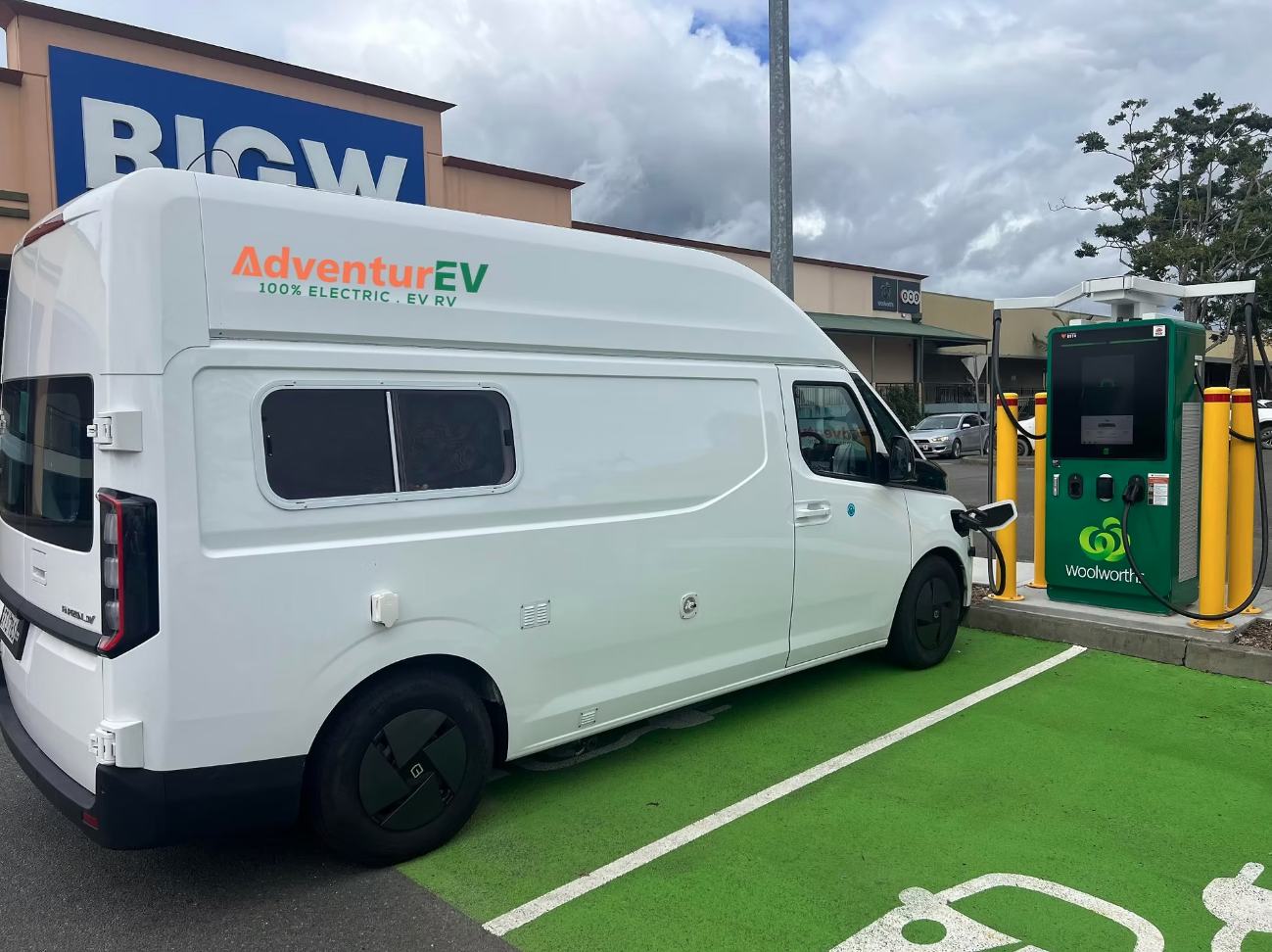
I joined them. The van was AdventurEV's K1, and my first impression was how much space it had, and how much had been fitted into that space. It felt like a home away from home.
I build Plugroo, an EV charging app, so I spend a lot of time thinking about where electric vehicles can travel and where charging is available. An electric campervan is an interesting test case: it's larger and heavier than a car, and its owners want the freedom to explore. So I asked Dave Hinds, who runs Brisbane-based AdventurEV, the obvious question. His answer was yes, with planning and with realistic expectations.
A campervan built around the way you travel
AdventurEV's approach is to start with the customer. How do you want to travel? What do you want to take with you? How do you want the space to work? The answers shape a custom fitout, instead of asking every customer to make the same floorplan work for them.
The K1 on display is built on a 5.5-metre Farizon SV with an 83 kWh battery. Even in that space, the fitout included a lot without making the interior feel cramped. That's what struck me most: the amount of room, and how thoughtfully it had been used.
AdventurEV's work also extends beyond campervans. The team has built commercial vehicles, including a medical van, and a retro-style campervan with a look that could have come from an old surf film. The common thread is the custom-build idea: shaping the vehicle around the way it will be used.
Range depends on the way you travel
A campervan has different needs from a small car. It carries more, has a larger profile, and the load can change from one trip to the next. Speed, wind, road conditions and what's packed onboard all affect how far it can travel between charges.
Dave puts the fully loaded K1's real-world range at around 280–320 km between charges. That's a useful planning figure, not a promise that every trip will cover the same distance.
AdventurEV's newer builds on the 6-metre Zeus Max carry a bigger 100.9 kWh battery, so you can expect a bit more again. For longer days, a single fast-charge stop along the way is usually all it takes.
Plugroo tip. Plan around the battery you'll arrive with, not the distance on the sign. A heavy, boxy van uses noticeably more energy at 110 km/h than at 90, so build in a buffer and keep a backup charger in mind for each leg.
Charging a larger vehicle
A question that came up when we talked about the K1 was whether a 5.5-metre van fits into public charging bays. Dave says fitting the van into charging bays hasn't been an issue for AdventurEV to date.
Towing adds another consideration. Pull-through bays aren't available everywhere, so if you're travelling with a trailer, it's sensible to check the layout before setting off and be prepared to unhitch if needed.
Powered caravan sites can help too. A 15-amp site can provide roughly 3.5 kW of power. Over a long night, that can add a useful amount of charge, although the actual amount depends on the site and the vehicle's charging equipment.
Please note: rules and available power vary between caravan parks. Some charge extra for EV charging and some don't allow it, so check with the park before you book.

Planning a campervan trip? Start with the chargers
Plugroo puts Australia's charging networks on one map and plans your stops around your battery, not just the distance. Built for Australia, free to download.
Can you tour Australia in an electric campervan?
For many popular touring routes, yes. With public fast chargers along the way and powered sites when they suit your itinerary, an electric campervan can take you a long way.
There are very remote areas where the available charging network may not suit this type of trip. Dave is clear about that: those destinations aren't the market AdventurEV is building for. Knowing your route and the options along it helps you decide whether an electric campervan is right for the journey you have in mind.
Full disclosure: I built Plugroo, so weigh this accordingly. It brings chargers from the major Australian networks together on one map and plans your trip around the battery you'll actually arrive with, not just the distance. You can try it in the browser at plugroo.com.au without downloading anything.
A different kind of road trip
An electric campervan won't suit every traveller or every itinerary. If your plans depend on remote tracks and long stretches without charging, a diesel vehicle may still be the better match.
But for many coastal drives, regional routes and campground stays, an electric campervan offers another way to travel. And when you stop for the night, you can enjoy the quiet of camp without an engine idling nearby.
The K1 at AdventurEV's stand showed me what happens when a familiar idea, the campervan, meets a new platform and a genuinely custom approach. If you're curious, take a look at AdventurEV's builds at adventurev.com.au, or read Dave's own guide, "But where do you charge it?". Just be prepared for people to want a look inside.
Key takeaways
- Electric campervans are a real option in Australia, with builders like AdventurEV fitting them out around how each owner travels.
- AdventurEV's K1 is built on a 5.5-metre Farizon SV with an 83 kWh battery.
- Dave Hinds puts the fully loaded K1's real-world range at around 280–320 km between charges.
- Newer builds on the 6-metre Zeus Max carry a bigger 100.9 kWh battery.
- Standard charging bays haven't been a problem for the 5.5-metre van, but towing usually means checking for pull-through bays or unhitching.
- A 15-amp powered site adds roughly 3.5 kW overnight; check park rules first.
- For very remote routes with long gaps between chargers, a diesel vehicle may still suit better.
Find your next charger with Plugroo
All of Australia's networks in one view, live check-ins, and a smart pick for where to charge next. Free to download.
Sources & further reading: AdventurEV, K1 campervan; AdventurEV, Zeus Max electric campervan; David Hinds, "But where do you charge it?" Planning an electric road trip; real-world range figures supplied by AdventurEV. Specifications and charging conditions change, so verify current details before you travel.
Last updated: October 2026 · Author: Rob, founder of Plugroo