
Free EV Charging in Australia: Where to Find It & How to Use It
Many EV drivers assume public charging always costs money. It doesn't. This guide covers where free EV charging actually exists in Australia, which networks offer it, and how to avoid the hidden catches.
Many EV owners will tell you: "Public charging always costs money." That's not entirely true.
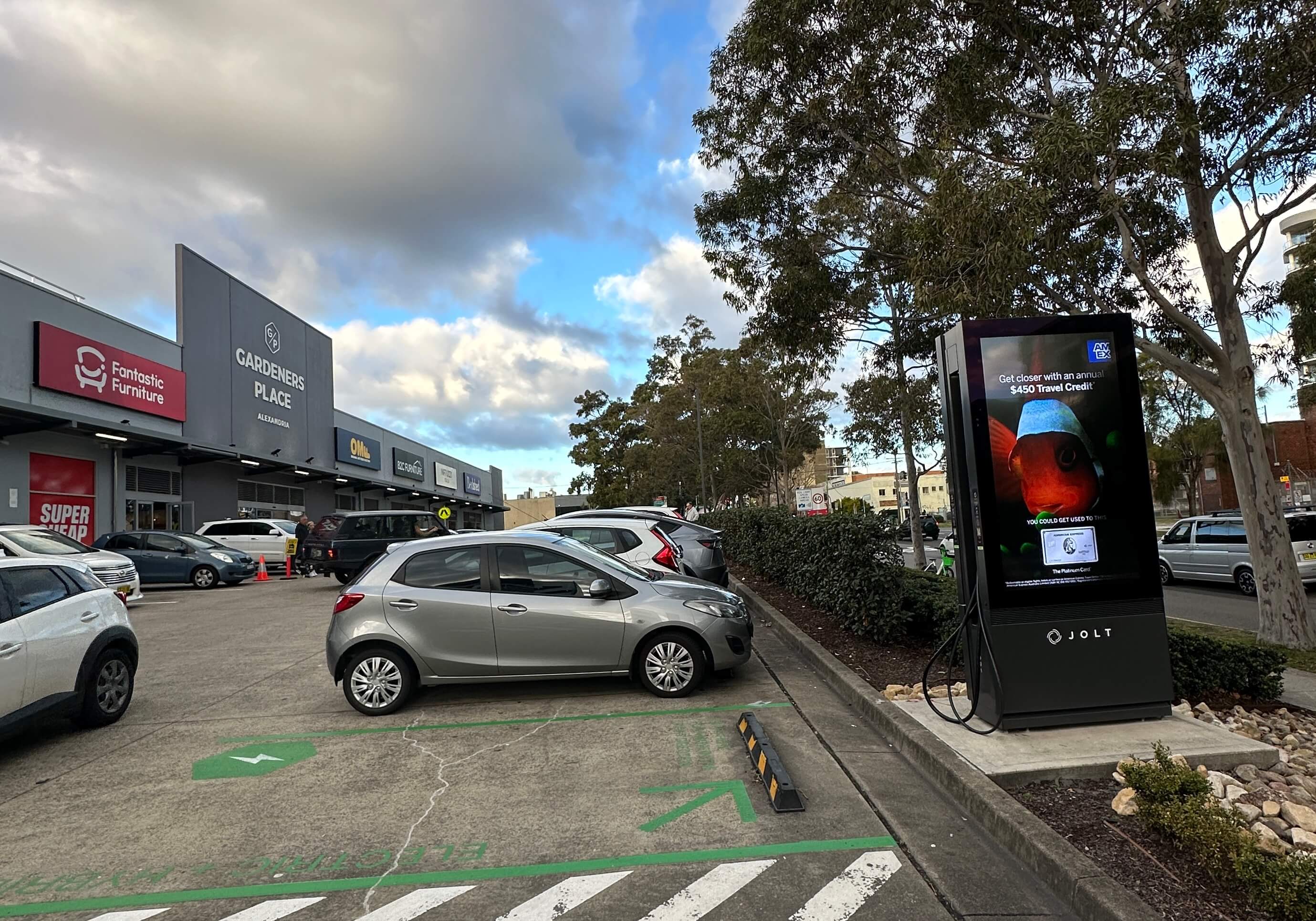
As of May 2026, Plugroo has catalogued more than 5,000 public EV charging sites across Australia — from Sydney's inner suburbs to small regional towns in South Australia. Among them, a meaningful number are genuinely free, or provide a daily free quota: through government-funded programs, retail footfall strategies, and innovative models like JOLT, which uses advertising revenue to subsidise charging costs for drivers.
The question isn't whether free EV charging exists in Australia. It's knowing where to find it. This guide covers four dimensions: which networks are free, which states have the most options, which venue types to look for — and how to avoid chargers that appear free but come with conditions attached.
Quick start: Open the Plugroo map, select the "Free" filter, and see real-time availability for free EV chargers near you — across all networks and states. Open Plugroo
Which EV Charging Networks Offer Free Charging in Australia?
Not all "free" is equal. Below is a breakdown ordered from genuinely free to conditionally free, based on what Australian EV drivers can realistically access in 2026.
JOLT
7 kWh free per day · DC fast charging · Most notable- Each registered account receives a free daily quota of 7 kWh — roughly 45–50 km of range
- Usage beyond 7 kWh is billed at $0.46/kWh
- Charge rate 25–50 kW DC via CCS2 connector
- Business model: advertising screens on charger units generate revenue that offsets charging costs
- Requires the JOLT app and a registered account to start a session
- Powered by 100% Australian-certified green electricity
Council and government chargers
Free · AC charging- Operated by local and state governments; particularly common in regional towns
- Mostly 7–22 kW AC — best suited for stays of one hour or more
- No app required; simply plug in and charge
- Some sites enforce a maximum dwell time (e.g. 3 hours)
- Filter by "Government" or "Council" category on Plugroo to locate these
Shopping centres and retailers
Partially free · Conditions vary- Select Westfield centres, IKEA, Bunnings and other retailers offer free AC charging as a customer amenity
- Speeds mostly 7–22 kW AC
- May require proof of purchase or parking validation
- Policies differ by location — check recent user reviews on Plugroo before heading out
Car dealerships
Free · Customers only- Tesla, BYD, Kia, Polestar and other brand showrooms often have on-site chargers
- Generally available to service customers or brand vehicle owners
- Speeds vary; mostly 7–22 kW AC
- Some dealerships open chargers to the public during events or promotions
What about Chargefox? Chargefox is Australia's largest charging aggregation platform (400+ sites), and most of its fast chargers are paid. However, some partner merchants operate free AC chargers through the Chargefox platform. Filter by the "Free" tab in the Chargefox app or on Plugroo to locate them.
Find free EV chargers near you with Plugroo
Filter by network, speed, connector type, and real-time availability to find a free charger that actually suits your situation.
State by State: Where to Find Free EV Charging in Australia
The availability of free EV charging varies significantly across Australian states. The eastern seaboard currently offers the most options, but regional council chargers in less-populated areas are worth knowing about too.
New South Wales (NSW)
Sydney's inner suburbs have the highest JOLT density, with units installed across council areas including North Sydney, Inner West, Waverley, Northern Beaches, and Hornsby. NSW Government funding has supported 65 new JOLT sites across seven council areas including the City of Sydney. Regional NSW towns such as Orange and Wagga Wagga also have free council chargers.
Victoria (VIC)
JOLT is expanding rapidly in Melbourne and has reached inner-city council areas including Bayside, Knox, and Stonnington. Data from the Bayside Black Rock site shows 40% of charging sessions were completely free, confirming strong real-world demand. Several Victorian Government-funded AC chargers continue to operate at no cost.
Queensland (QLD)
Brisbane CBD and surrounding suburbs are served by council AC chargers. Hotels and resorts along the Gold Coast and Sunshine Coast provide free charging for guests. Regional QLD's government-funded charging infrastructure is being expanded, with the number of free charging sites growing.
South Australia (SA)
JOLT coverage in Adelaide's inner suburbs is relatively complete, with sites in Campbelltown, Charles Sturt, Marion, and Port Adelaide Enfield. An ARENA-funded pilot covers 21 fast-charging units. Check Plugroo for the current free status of regional SA council chargers, as these can change.
Western Australia (WA)
Perth currently has fewer free public chargers, concentrated mainly at individual shopping centres and regional council sites. The WA Government has increased investment in charging infrastructure in recent years, and the number of free public chargers is expected to grow through 2025–26. Enable the "Show Free" filter on Plugroo to see current options.
ACT & Other Territories
Canberra has a small number of free AC chargers at council and government sites. Some regional tourist towns in Tasmania offer free destination charging, which suits self-drive island itineraries. The NT has very limited free charging coverage; long-distance travel there requires planning around paid fast charging nodes.
A note on accuracy. The state-by-state information above is based on Plugroo platform data and public government announcements. Charger status can change as operators update policies. Always check live status and recent user reviews on Plugroo before you set off.
See free chargers in your state on the Plugroo map
Switch to your state, turn on the "Free" filter, and see every charger marked as free along with its real-time availability.
Best Venue Types for Free EV Charging in Australia
Beyond searching by network or state, understanding which types of venues typically have free chargers is the most practical mental shortcut for finding one when you need it.
| Venue type | Likelihood | Typical speed | Best suited for | Notes |
|---|---|---|---|---|
| On-street / roadside (JOLT) | High | 25–50 kW DC | Quick top-up during city errands | Requires JOLT app; 7 kWh free daily quota |
| Council car park | High | 7–22 kW AC | Longer stays, shopping, appointments | Some sites have a dwell-time limit |
| Shopping centre | Medium | 7–22 kW AC | Grocery or retail visits | Policies vary by centre — confirm on Plugroo first |
| Car dealership | Medium | 7–22 kW AC | Servicing or test drive appointments | Usually restricted to brand vehicle owners or service bookings |
| Hotel / accommodation | Medium | 7–11 kW AC | Overnight stays and destination trips | Often guests only; confirm when booking |
| Tourist destination / destination charging | Variable | 7–22 kW AC | Wine regions, national parks, restaurants | Limited supply; check Plugroo before arriving |
| Workplace | Unlikely (public) | 7–22 kW AC | Employee benefit | Rarely accessible to the general public |
Destination charging: an underrated source of free EV charging in Australia
A growing number of Australian wineries, boutique hotels, national park visitor centres, and restaurants now offer destination charging — letting guests and visitors charge for free during a meal or visit, often for several hours at a time.
These chargers are typically slow (7–11 kW AC), spread across many locations, and don't always appear in mainstream charging network apps. But for weekend road trips, they're genuinely useful. Plugroo includes a growing number of destination charging sites, which you can filter by the "Destination" category on the map.
How Fast Are Free EV Chargers? Speed Comparison
Most free chargers in Australia are AC slow chargers — fine for longer stops, but not for a quick top-up. JOLT is the notable exception: it's free and DC fast charging.
| Charger type | Representative network / venue | Speed | Time to add ~100 km range | Cost |
|---|---|---|---|---|
| DC fast (free) | JOLT | 25–50 kW | ~15–25 min | 7 kWh/day free |
| AC standard (free) | Council chargers, some shopping centres | 7–22 kW | ~1–2 hours | Free |
| AC slow (destination) | Hotels, tourist venues, dealerships | 3.7–11 kW | ~3–5 hours | Usually free for customers |
| DC ultra-fast (paid) | Evie, Ampol, Tesla Supercharger | 50–350 kW | ~8–30 min | Paid: $0.45–$0.73/kWh |
Practical tip for city commuters. If you need to add 40–50 km of daily commuting range, JOLT's 7 kWh free quota does it in 15–20 minutes — faster than waiting for an AC charger at a cafe. JOLT is the best free EV charging option in Australia for city drivers who need a quick midday top-up.
5 Things to Know Before Using a Free EV Charger in Australia
The label "free" often comes with fine print. These are the most common issues Plugroo users encounter when seeking out free EV charging in Australia.
- Free does not mean unconditional — you still need an app or RFID card to start a session. JOLT charging is genuinely free, but you must download the JOLT app and register an account first. Plugging in without a registered account will not start a charging session. Some units also have a one-off $1.99 activation fee. A number of council chargers and shopping centre chargers similarly require app activation. Check how to start a session at your target charger on Plugroo before you leave home.
- Charging may be free, but parking might not be. Chargers in shopping centre car parks may charge nothing for electricity, but the car park itself might cost $3–$5 per hour. A 30-minute charging session can easily cost more in parking than you saved on power. On-street JOLT chargers are generally in free-parking or council-managed street bays — but parking conditions vary by suburb and should be checked individually.
- Be aware of maximum dwell-time limits. Some free chargers have a maximum usage period — typically two hours. Overstaying can result in a penalty notice, which is a parking infringement, not a charging fee. This is most common in shopping centre car parks. Plugroo's charger detail pages list known time limits, and recent user comments often carry the most up-to-date information.
- Petrol cars blocking EV bays remain a real problem. Enforcement of EV-only parking bays is still inconsistent in parts of Australia. After navigating to a charger, you may find the bay blocked by a petrol car. Plugroo's real-time availability feature lets you see whether a charger is online and reportedly available before you make the trip, reducing the risk of arriving to find it occupied.
- Check that the connector type is compatible with your car. JOLT uses the CCS2 connector (compatible with most EVs sold in Australia from 2022 onward). Some older chargers still have CHAdeMO connectors (primarily for older Japanese EVs). Council AC chargers generally use Type 2. Use Plugroo to confirm the connector type at each site before you arrive.
Common misconception: Google Maps shows free, but it isn't. Chargers marked as "free" on Google Maps can have outdated information. Operators change pricing at any time, and Google Maps data often lags by months. Plugroo uses continuous real-time user check-ins to keep status current — it's a significantly more reliable source for confirming whether a charger is still free today.
Check live status before you head out
Recent user check-ins on Plugroo show real usage feedback — usually within 48 hours — so you know whether a charger is free, working, and available before you make the trip.
Is Free EV Charging in Australia Here to Stay?
Free EV charging is contracting globally. The logic is straightforward: as EV numbers grow, free charging puts increasing cost pressure on operators, and commercial sustainability becomes harder to justify.
Australia is currently at a different point on that curve. EV sales reached 114,283 vehicles in 2024 — up 16.1% year-on-year — but EV penetration is still in early growth. Governments are using subsidised infrastructure and free public charging to reduce the purchase hesitation of potential buyers, which means there's meaningful political will to sustain free charging supply at this stage. For drivers, this is a window worth taking advantage of.
This window won't last indefinitely. JOLT's advertising-supported model provides a relatively durable path to free charging, but there's no official commitment that the 7 kWh daily quota will hold as charger utilisation increases. Free resources available to early adopters now may not exist in a few years. 2026 is a good year to build the habit of using free EV charging in Australia.
The business models behind free charging — and how durable each is
| Model | Example | How free charging is funded | Durability |
|---|---|---|---|
| Advertising subsidy | JOLT | On-charger ad screen revenue covers operating costs | Relatively high |
| Government subsidy period | Council chargers | Federal/state funding covers installation and operation | Uncertain after subsidy ends |
| Customer attraction | Shopping centres, hotels, tourist venues | Charging treated as a cost of doing business | Changes with business strategy |
| Brand experience | Tesla, BYD, and others | Included in ownership experience and marketing budget | Brand customers only |
Data from the Electric Vehicle Council shows Australia's fast-charging network grew by 20% in the past year, with infrastructure moving from coverage-first to density-optimised. As competition at existing sites intensifies, operators will increasingly reassess the economics of free charging — making today's free options more valuable precisely because they may not exist in the same form tomorrow.
Key Takeaways: Free EV Charging in Australia
Free public EV charging in Australia is real and accessible — it's not a myth or a rarity. JOLT's daily 7 kWh free quota is genuinely useful for urban top-ups. Council chargers and shopping centre chargers can bring your charging cost to zero for longer stops at the right locations.
The catch is that free charging is distributed across different networks, venue types, and states, and it can change without notice. Taking 60 seconds to check Plugroo before you leave is the single most effective habit for making the most of Australia's free EV charging options.
Find free EV charging near you
Real-time availability · User reviews · Filter by free / speed / connector type · All of Australia covered
Found a free charger that isn't on the map? Submit an update in Plugroo to help other Australian EV drivers find it. Your check-in directly improves the experience for every driver who searches after you.
Data sources: Electric Vehicle Council — 2025 Australian Electric Vehicle Status Report; JOLT — official network announcements; state and local government public documents; ARENA — funded project records; Plugroo platform database. Charger status and pricing may change at any time — see Plugroo for current real-time data.
Last updated: May 2026 | Author: Plugroo Team